West Des Moines Epoxy Flooring has spent more than 20 years installing epoxy flooring in Pleasant Hill, and the floors we think hardest about here are the ones worn down by feet rather than tires. Locker rooms, training rooms, home gyms and team corridors wear differently from a garage where a car sits overnight, and the coating has to be picked for that wear.
Every job starts the same way. We open the slab with a diamond grinder or a shot blaster instead of an acid wash, test it for moisture as part of the written scope, and hand over a proposal that names the product line, the coat count and the finished thickness. If a slab is cracked, spalled or carrying an old coating that should come off, we say so before anyone signs.
What changes from room to room is the top of the system: how much texture goes into the broadcast, whether a polyaspartic or urethane topcoat suits the traffic, and where a rubber mat will simply outlast any coating we could put down. The sections below walk through how we make those calls.
Southeast Polk’s Stadium and What Cleats Do to Floors
A New Stadium on Martha L. Miller Drive
Southeast Polk’s stadium opened in August 2023 just south of the high school on Martha L. Miller Drive. The Des Moines Register reported a 22.1 million dollar project with seating for 6,200 spectators, a pedestrian tunnel under the street connecting the school with the stadium, and new modern training facilities for the athletes. Plans the Pleasant Hill council approved earlier described a state of art locker room as part of the build.
We should be clear that we have no connection to the district or the stadium. We did no work there and know nothing about how its floors were built. We bring it up because a building like that makes visible a kind of traffic that also turns up in smaller places around town: club training rooms, batting cages, and the garage or basement a family turns into a weight room.
Cleats and Field Grit on Hard Floors
Cleats concentrate a player’s weight onto a few small studs, and when those studs cross a hard floor they scuff both the cleat and the surface. Add the sand, crumb rubber and dried soil that ride in off a field, and every step becomes a light sanding pass. A team corridor can see hundreds of those passes in a single afternoon.
That wear lands in lanes: from the door to the benches, from the benches to the showers, and along whatever path leads back out to the field. Glossy coatings show it first as dull tracks, then as scratches through the topcoat. Picking a system means planning for those lanes rather than for the average square foot of the room. We walk the space with whoever runs it and mark those lanes on the floor plan before we choose a single product.
Wet Traffic Changes the Problem
Team areas get wet in ways a garage rarely does. Players come in off a rained-on field, towels drip near the showers, and floors get mopped or hosed down after practice. A coating that feels fine when dry can turn slick once a film of water and grit sits on it.
So in sports rooms we treat abrasion and traction as one decision, not two. A coating chosen only for hardness can end up too smooth, and one chosen only for texture can wear down to a smooth surface within a season if the topcoat beneath the grit is too thin. The right answer sits between those two, and it shifts with how wet the room gets.
Looking for epoxy-flooring closer to Carlisle? See Carlisle Epoxy-Flooring.
Locker Rooms and Training Rooms: Choosing the System
Preparing the Slab for Hard Use
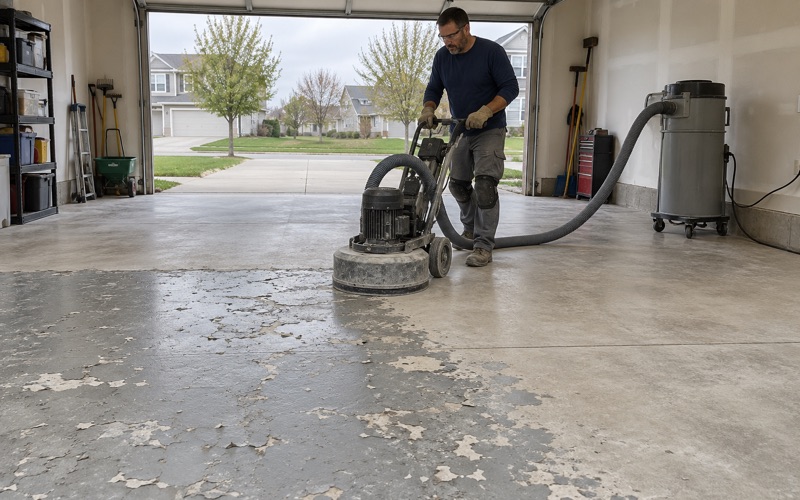
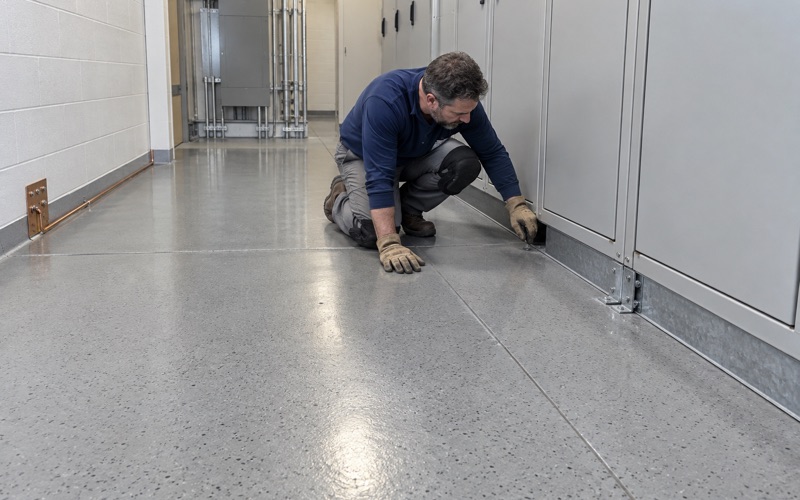
A locker room floor that will see cleats needs a deeper profile than a showroom floor. We grind or shot blast to the ICRI CSP range the primer calls for, and we capture the dust at the machine with a vacuum rather than washing it toward a floor drain. Old sealers and failed paint come off completely, because a new coat is only as well bonded as the layer beneath it.
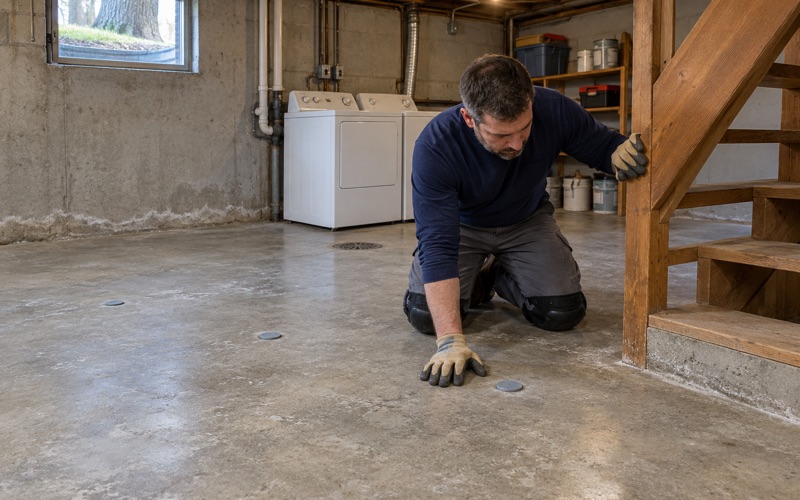
Moisture testing comes before the price is final. Depending on the slab, that means an ASTM F2170 in-situ relative humidity probe, an ASTM F1869 calcium chloride test, or both. Locker rooms often sit on slabs that stay damp from showers and cleaning, and a reading that runs too high calls for a moisture-mitigation primer or a different system altogether.
Building Abrasion Resistance into the Layers
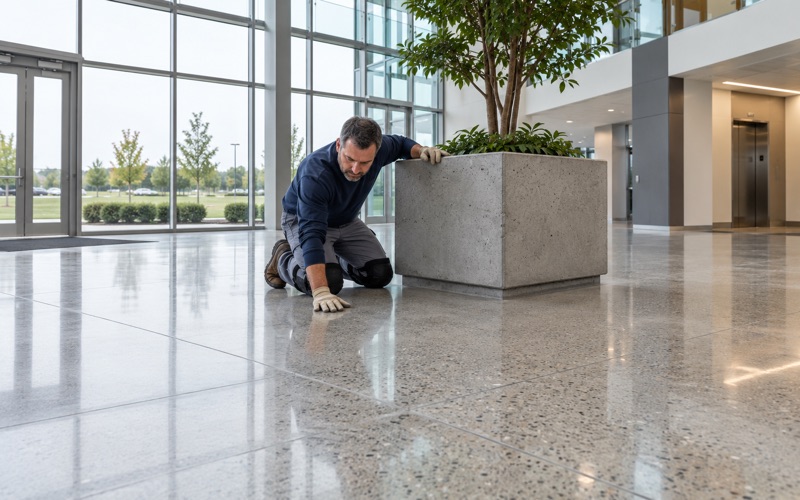
For abrasion, the body of the system matters as much as the surface. A 100% solids epoxy base gives a thick, hard layer, and a quartz aggregate broadcast locked into it adds a mineral surface that takes scuffing better than a smooth film. Where hot water, heavy cleaning or thermal shock is part of daily use, urethane cement is often a better fit than epoxy. It tolerates heat and damp concrete in ways a standard epoxy does not.
The topcoat is the layer that actually meets the cleat. Polyaspartic and polyurea topcoats resist scratching and yellowing better than many epoxies, and a topcoat over a broadcast can be applied heavier in the lanes we expect to wear. Your proposal lists which one we chose and the finished thickness, so you can check the floor against it.
Specifying Traction Instead of Promising It
A textured floor is not the same as a guarantee, and no coating makes a wet floor safe on its own. What we can do is specify the texture: the grit size of the broadcast, how much of it stays exposed, and how many topcoat passes go over it. More topcoat makes a floor easier to clean and gentler underfoot; less leaves more bite.
In wet team areas we usually lean toward the more aggressive end near showers and entrances, then ease off in dry dressing areas where players walk barefoot or in socks. That balance gets written into the scope rather than left as a slogan on the quote. If the room’s use changes later, a fresh topcoat with a different texture can be added without starting over from bare concrete.
Where Matting Belongs and Where a Textured Coating Does
The Heaviest Cleat Paths
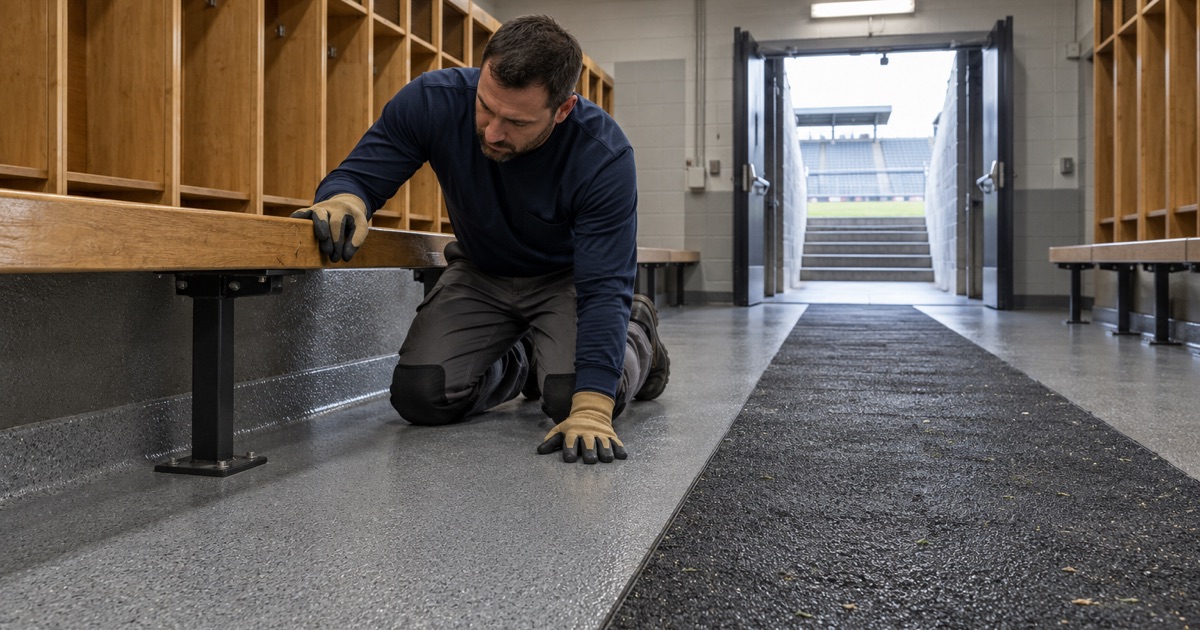
In the lane where cleated players walk most, rubber matting is often the better surface, and we will tell you so. A mat absorbs the studs, holds grit in its texture instead of grinding it into the floor, and can be pulled and replaced when it wears out. We cannot promise any coating will stand up to metal studs indefinitely, and we will not suggest otherwise.
A coated floor under a mat still earns its place. It seals the concrete against spills and cleaning water at the edges, keeps the room easier to clean when the mats come up, and protects the slab if the mat layout changes from one season to the next.
Open Floor Between the Mats
Outside the main cleat paths, a textured broadcast floor usually does the job better than wall-to-wall rubber. It is easier to mop, does not trap moisture the way a mat can, and keeps the room looking bright. Benches, lockers and equipment racks also sit more steadily on a hard floor. A light-colored broadcast also makes tracked-in grit easy to spot, which tells staff when the floor needs sweeping.
The boundary between mat and coating is where we pay close attention. A mat edge that lifts or curls becomes a trip hazard, so we plan the coating finish and the transition so the mats lie flat and can still be lifted for cleaning. Where mats meet an entrance, we keep the coated border wide enough to catch water before it reaches the mat.
Cleaning Routines Shape the Choice
How a room gets cleaned decides as much as how it gets used. Floors scrubbed by machine need a topcoat and texture that the pads will not polish smooth, while rooms that are only mopped can carry a sharper broadcast. Disinfectants and hot-water rinses also narrow which topcoats will hold up over time.
We ask about the cleaning routine before we write the proposal, and we explain what the coating warranty covers and what it leaves out. Moisture coming up through the slab is the first exclusion we name, and damage from equipment the system was never meant to carry is another.
Gyms, Garages and Team Rooms Around Pleasant Hill
Home Gyms and Converted Garages
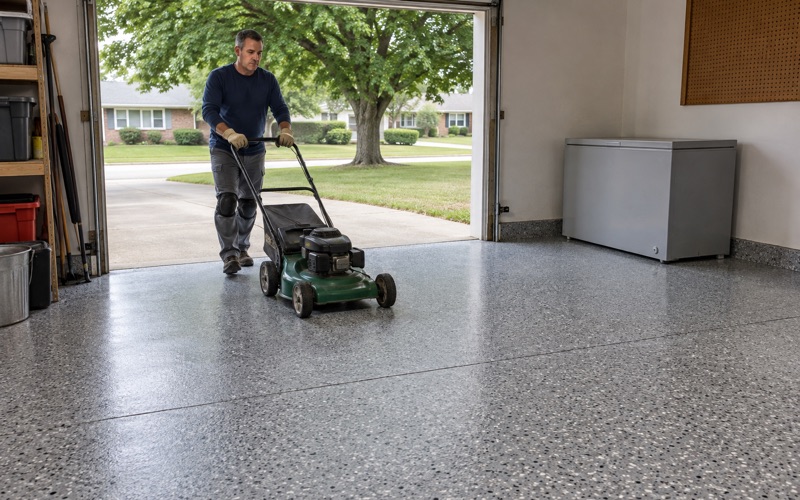
Most of Pleasant Hill’s homes were built between 1990 and 2019, and plenty of garages and lower levels in those houses double as weight rooms or practice spaces. A teenager who trains in cleats on the driveway tracks the same grit into the garage that a team carries into a locker room, just at a smaller scale.
We still test those slabs, whatever year the house went up. A newer garage is not automatically dry, and IRC R506.2.3 lets many garage slabs go in without a vapor retarder beneath them. Rubber gym tiles over a broadcast floor are a common pairing in a home weight area, with the coating left exposed where people walk in from outside.
Townhouse Garages and Winter Salt
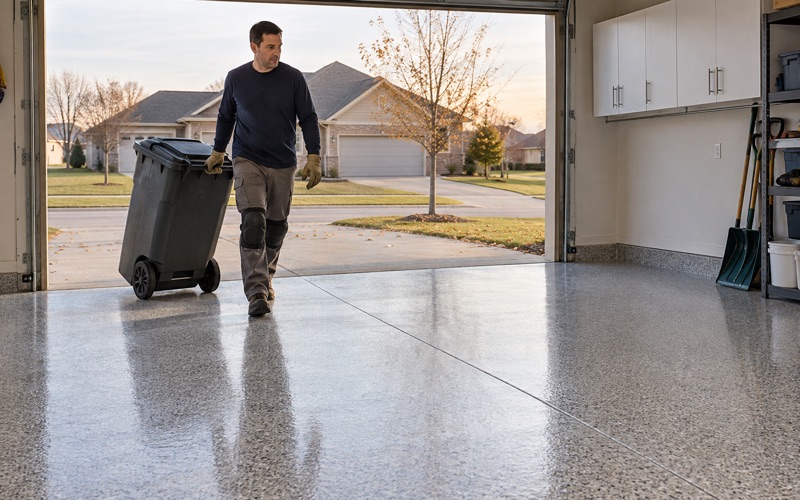
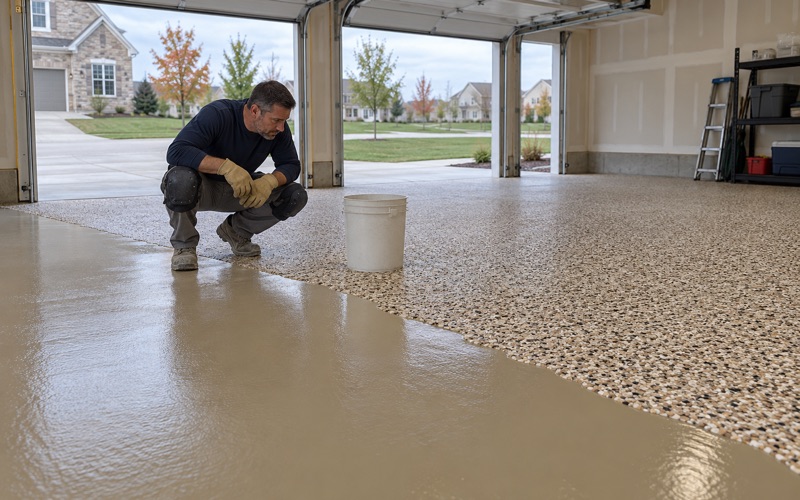
About 16 percent of Pleasant Hill’s housing units are single-family attached, so many garages here belong to townhouses. In an attached garage we offer low-odor products as a comfort and re-entry choice, not because Iowa requires them, and we schedule the cure around slab temperature and dew point instead of the calendar.
Those garages also take brine and rock salt from November through March. A system with a hard topcoat and a flake or quartz broadcast handles both the winter salt and the summer cleats that come in through the same door. An unheated garage in a central Iowa winter is one we will ask you to hold off on until the slab warms up.
Club Training Rooms and Small Team Spaces
Private training rooms, batting cages and youth sports spaces see cleats and turf grit on a smaller budget than a district stadium. Many of them cannot close for long, so we phase the work around their hours and use overnight or weekend windows where we can. Fast-curing polyaspartic topcoats help when a room has to reopen the next morning.
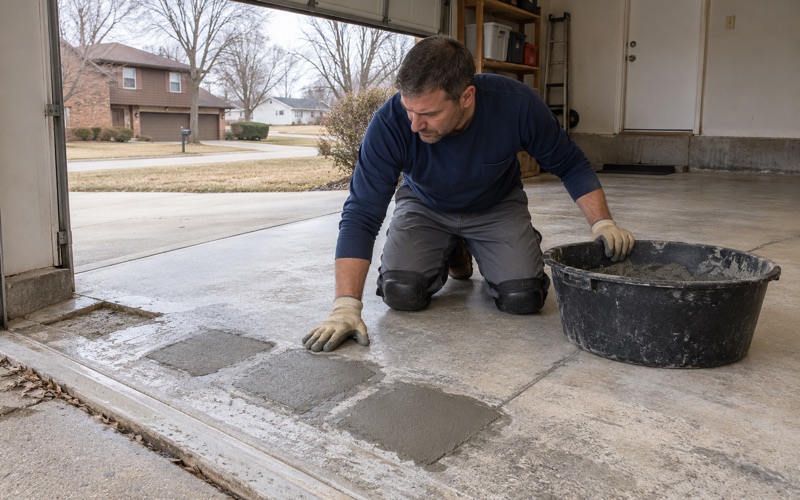
Wherever the floor is, the order of work stays the same: map the cracks and old coatings, grind, test for moisture, then build the system the room’s traffic calls for. If the slab needs repair before it should be coated, that goes in writing first.
- 20+ Years in Epoxy Flooring
- Moisture Tested Before Pricing
- Coats and Thickness in Writing