West Des Moines Epoxy Flooring has spent more than 20 years on epoxy flooring in Indianola and the rest of central Iowa, and some of the floors we get asked about here never see a car. They sit under goats, steers, sheep and poultry, and they get hosed down more often than any garage slab ever will. That changes almost every decision we make about the system, the texture and whether a coating belongs on the floor at all.
A floor under animals has two jobs that pull against each other. It has to stand up to manure and constant washing, and it has to give hooves something to grip without wearing them down. A high-gloss finish that looks good in a showroom can be the wrong answer in a barn aisle, and we would rather tell you that before a quote than after a slip.
So this page is about animal-contact floors: what wears them out, where traction comes from, and when a resin coat earns its place. If your project is a shop or a garage instead, the same honesty about preparation and testing applies, and we cover that further down.
The Warren County Fair Barns and What Wash-Downs Do to Concrete
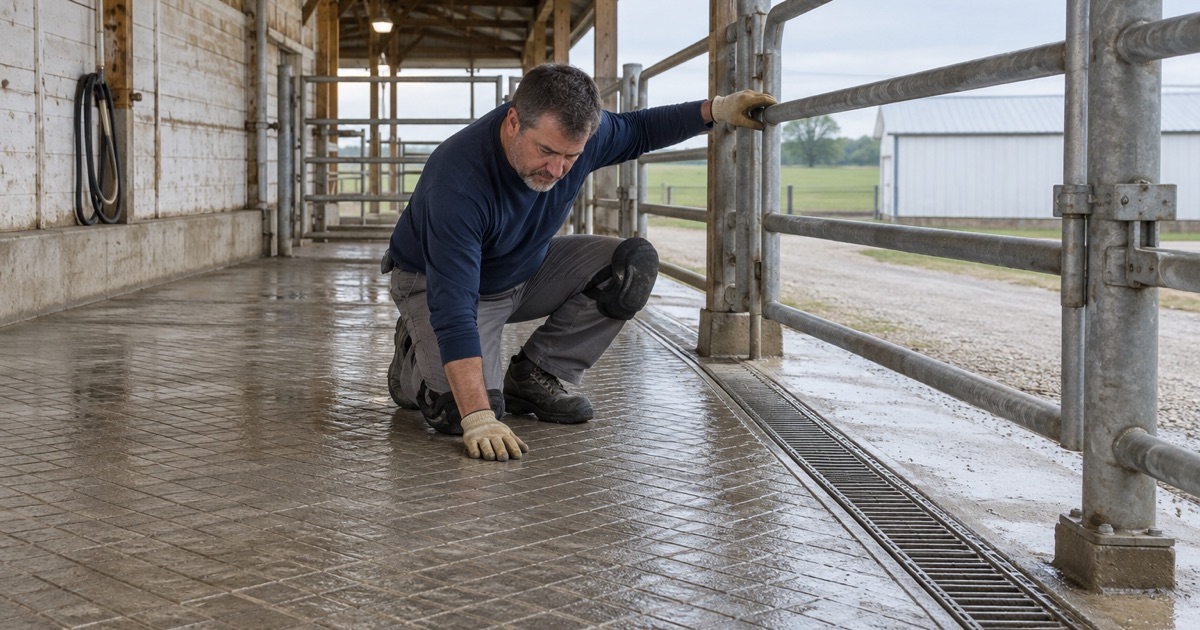
Indianola is the county seat of Warren County, and every summer the Warren County Fair fills the fairgrounds at 1400 W 2nd Avenue. Those barns are the clearest local example of the problem this page is about, even though we have no connection to the fair, its association or any of its buildings.
Barns That Are Being Restored and Rebuilt
The fair’s poultry and dairy goat barns were recently restored with new roofs, windows, sliding doors and cupolas, much of it with volunteer help. Local reporting has also described a proposed new barn that could include a wash rack, a scale room, new pens and restrooms, at an estimated cost of about 1 million dollars, with construction to follow fundraising and the plans not yet final.
Part of the push came from exhibitors who currently cross a busy road to wash and tie out animals, and a Southeast Warren FFA steer sale helped drive the effort. We do not know what floors that barn will get, and nobody should read this page as a prediction. What the project does show is that Indianola people think seriously about where animals stand, get washed and get led.
Organic Acids and Repeated Cleaning
The most useful written guidance we have read on this comes from the Ontario agriculture ministry’s advice on dairy barn floors, updated in April 2026. It is written for dairy free-stall housing, not show barns and not Iowa, so we apply it by analogy only. It says floors should resist the degradation of concrete caused by organic acids and by abrasion from repeated cleaning.
That is exactly what happens on a busy barn slab. Manure and urine sit on the surface, the cement paste softens, and every scrape and pressure wash carries a little more of it away. Over seasons the aggregate stands proud, the surface roughens unevenly, and the low spots hold liquid that keeps the cycle going.
What a Coating Can and Cannot Do
A well-bonded resin system can slow that wear by putting a sacrificial, cleanable layer between the concrete and what lands on it. Urethane cement in particular tolerates wet, chemical-heavy service better than a thin decorative epoxy, and it is often where we start the conversation for a wash area. Even so, a coating is a wear layer, not a guarantee, and it will need inspection and eventual recoating like any surface that is scraped daily.
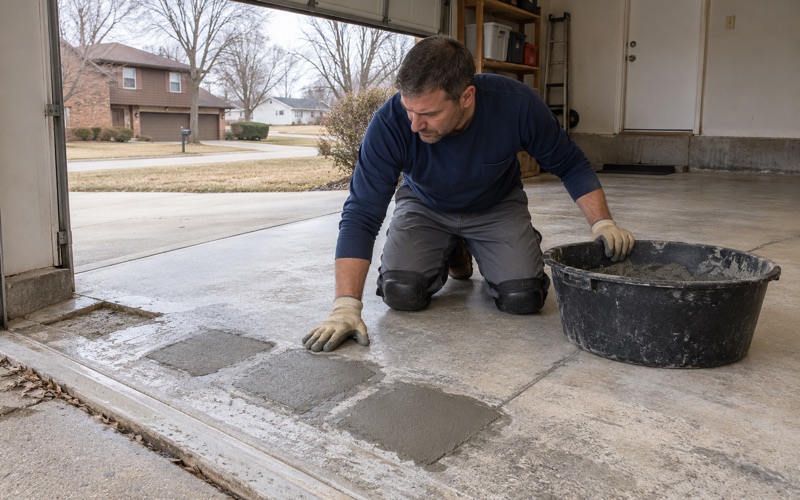
It also does nothing for concrete that has already lost its top. If the paste is gone and the slab is crumbling, we map that first and say plainly when repair or replacement has to come before any coat. Sealing over failing concrete only hides the problem for a season.
Looking for epoxy-flooring closer to Altoona? See Epoxy-Flooring in Altoona.
Too Smooth or Too Rough: Traction Under Hooves
The same Ontario guidance puts the traction problem in two sentences. Floors that are too smooth lead to cows slipping and injuring themselves, and floors that are too rough lead to feet and leg problems. Every barn floor decision lives somewhere between those two warnings.
Why the Middle of the Range Matters
A glossy coated aisle that is wet with wash water is the too-smooth end of that range, and it is the reason we never recommend a standard garage finish for animal traffic. An animal that slips once tends to move nervously afterward, which makes handling harder for the people leading it as well.
The too-rough end is quieter but just as real. Coarse, open texture can wear hooves and hold manure in the profile, so the floor is harder to clean and the acids sit longer. The guidance describes the goal as smooth enough to clean and minimize hoof wear, and that is the target we write the texture toward.
How Texture Is Built Into a Coated Floor
Traction on a resin floor does not come from a slogan. It comes from what is broadcast into the wet coat and how much topcoat goes over it. A quartz aggregate broadcast gives a firmer, more open grip than a vinyl flake system, and a heavier topcoat rounds the peaks so the surface is easier on feet and easier to wash.
We name that broadcast and topcoat in the written proposal, along with the product line, the coat count and the finished thickness. That way the floor you walk on can be checked against what you were quoted, and nobody is left guessing about why it feels the way it does under a wet boot.
When Plain Grooved Concrete Is the Better Floor
For many barn floors the honest answer is not a coating at all. Well-placed grooves or a broom finish in sound concrete give dependable traction, shed wash water off the walking surface and cost far less than a resin system. If that serves your animals better, we will say so.
Where a coating does make sense, it is usually in the places people and animals share at slower speeds: a feed room, a tack room, a clean aisle, or the wall faces and curbs around a wash area. Traction stays the first test, and appearance comes a distant second.
Wash Racks and Show Aisles
A wash rack is the hardest floor in any barn. It is wet nearly every time it is used, it collects manure and shampoo, and it is where an animal is most likely to shift its weight suddenly.
Wash Rack Floors
On a wash rack we treat traction as non-negotiable and appearance as irrelevant. If a coating goes down at all, it is a heavily textured, wet-service system, and we will often suggest leaving the standing area as grooved concrete and coating only the curbs and lower walls where splash and scrubbing do the damage.
We also tell you up front what a coating does not do. It will not make the slab immune to acids, it will not stop water moving through cracked concrete, and it does not remove the risk of an animal going down. Anyone promising those things is selling a brochure, not a floor.
Show Aisles and Tie-Out Areas
Aisles where animals are led, clipped and held before a class see less water but more hoof traffic. Here a textured system can make sense if the concrete is sound, because it gives a cleanable surface that does not soak up odor the way bare, worn concrete does.
The texture still has to suit the animal. Goats, sheep and cattle all load a floor differently, and a finish that works for a person in boots is not automatically right for a hoof. We would rather run a test patch than guess.
Preparation and Testing Before Any Coat
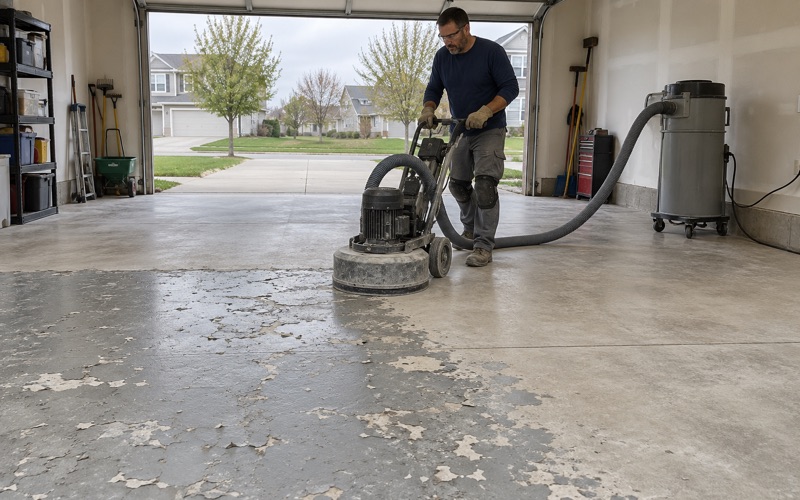
Every slab we coat is opened with a diamond grinder or a shot blaster to a measured concrete surface profile, never acid etched, so the system has something real to grip. Grinding dust is captured at the machine by a vacuum rather than washed down the floor. Old coatings, cracks and spalls are mapped before the price is final.
A moisture test is part of the written scope too. On a barn floor that is hosed down regularly, we also want to see how the slab behaves once it has dried out, because a coat applied over damp concrete is the most common reason one lets go.
Acreage Barns and Shops Around Indianola
Outside town, a lot of Indianola-area properties pair a small animal barn with an equipment shop, and owners often want one contractor for both. Those are two very different floors and we price them that way.
Keeping the Animal Side and the Equipment Side Separate
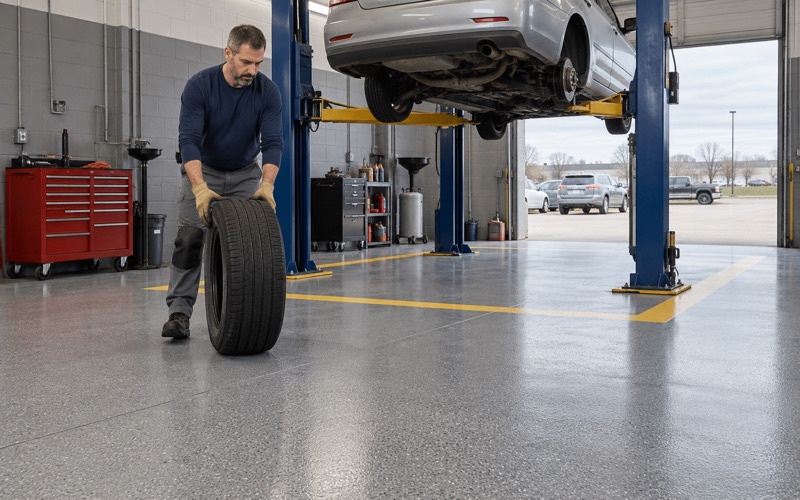
The equipment side can take a system built for tires, fluids and the brine and rock salt that ride in from November through March. Polyaspartic topcoats over a well-prepared base handle that service well, and a moderate broadcast keeps the floor workable when it is wet.
The animal side follows everything above: traction first, texture kept in the middle of the range, and grooved concrete considered seriously before resin. Running one system across both rooms because it is convenient is how a barn ends up with a floor that is too slick under hooves.
Soils and Slab Moisture Under Indianola
Indianola sits on dissected till plain soils, mostly Sharpsburg silty clay loam, with poorly drained Clearfield and somewhat poorly drained Macksburg and Lamoni in places where the seasonal water table rises close to the surface. That is a reason to test a slab rather than assume it is dry, whatever the age of the building.
We use ASTM F2170 in-situ relative humidity probes or ASTM F1869 calcium chloride testing depending on the floor, and the result shapes whether a moisture-mitigation primer belongs in the system. A coating is not a moisture barrier for the building, and we never present it as one.
What the Proposal and Warranty Spell Out
Before a job is sold we explain what the coating warranty leaves out, and moisture vapor transmission is the first exclusion we name. For animal floors we add the obvious ones: hoof wear, scraping damage and chemical exposure beyond what the system is rated for are maintenance items, not defects.
Cure schedules follow slab temperature and the dew point spread at the surface rather than a calendar date, which matters in an unheated barn or shop through a central Iowa winter. If the conditions are wrong, we wait, and we tell you why before the first coat goes down.
- 20+ Years in Epoxy Flooring
- Moisture Tested Before Pricing
- Coats and Thickness in Writing