
West Des Moines Epoxy Flooring installs commercial epoxy flooring in West Des Moines, IA, serving surrounding cities including Clive, Windsor Heights, Waukee, Urbandale and Norwalk. With more than 20 years of work on concrete, we know that a commercial floor is judged on two things: how it holds up after years of traffic and cleaning, and how little it disrupts the business while it is being installed.
Offices, stores, clinics, salons and service shops each put different demands on a floor. Some need a polished, professional look in a lobby, while others need a seamless, cleanable surface that stands up to chemicals and spills. We choose the system for the space and the work done in it, and we write the product line, coats and finished thickness into the proposal so the facility team can check the result against the quote.
Every commercial slab is opened with a diamond grinder or a shot blaster, tested for moisture and mapped for cracks and old coatings before the price is final. If a slab needs repair before it should be coated, the proposal says so plainly.
Planning a Floor Around a Working Business
Phasing around business hours
Most businesses cannot close for a week while a floor is replaced. We break the floor into zones and schedule grinding and coating in overnight and weekend windows where needed, so the rest of the space keeps operating while each section is completed.
The schedule includes cure times for foot traffic, carts and equipment, based on the product line and the slab temperature on the day of installation. Each zone reopens when it is ready, not before, so the floor does not get damaged by early use.
Dust and odor in occupied spaces
Grinding concrete in an occupied building has to be done cleanly. Our grinders run with industrial vacuums that capture dust at the machine, and we mask doorways and return vents near the work area. Grinding waste is collected rather than rinsed toward floor drains or storm inlets.
Odor matters in offices, clinics and stores. We offer low-odor products for these spaces as a comfort and re-entry choice and plan ventilation with the building team. Floor coatings sold nationally fall under the 40 CFR 59 Subpart D VOC limits, and Iowa does not add a state limit of its own.
Documentation for facility managers
Facility managers need to know what was installed and how to care for it. The proposal names the product line, the number of coats, the finished thickness and the moisture test results.
After the job, we provide product data and care guidance so the floor can be maintained correctly. That record also helps when a future tenant or contractor needs to know what is on the slab.
Systems for Different Commercial Spaces
Offices, lobbies and corridors
Office floors need to look finished and wear evenly under daily foot traffic and rolling chairs. A solid color or metallic epoxy with a satin or matte topcoat gives a clean, professional look that hides scuffs better than high gloss.
Break rooms and corridors see spills and heavy cleaning, so we choose topcoats that resist staining and stand up to the cleaners your staff already uses. If a cleaner is known to dull a particular topcoat, we say so before the system is chosen.
Retail floors and showrooms
Retail floors take carts, displays and steady foot traffic. A seamless coating is easy to clean and can carry a brand color or a decorative flake. Showrooms often use metallic or polished finishes to set the tone for the products on display.
We specify slip resistance by the broadcast and topcoat, especially near entries where customers bring in rain and snowmelt, rather than promising it as a slogan. Entry zones can carry more texture than the sales floor, with walk-off mats doing the rest of the work.
Clinics, salons and personal-service spaces
Clinics, salons and other personal-service spaces often need floors that are hard, smooth and easy to clean. Seamless epoxy and polyaspartic systems give a continuous surface without grout lines, and an integral cove base can carry that surface up the wall where cleaning matters most.
We do not claim that a floor makes a business pass an inspection. Each industry has its own rules, and we build to the specification the owner or designer provides.
Auto repair and fleet shops
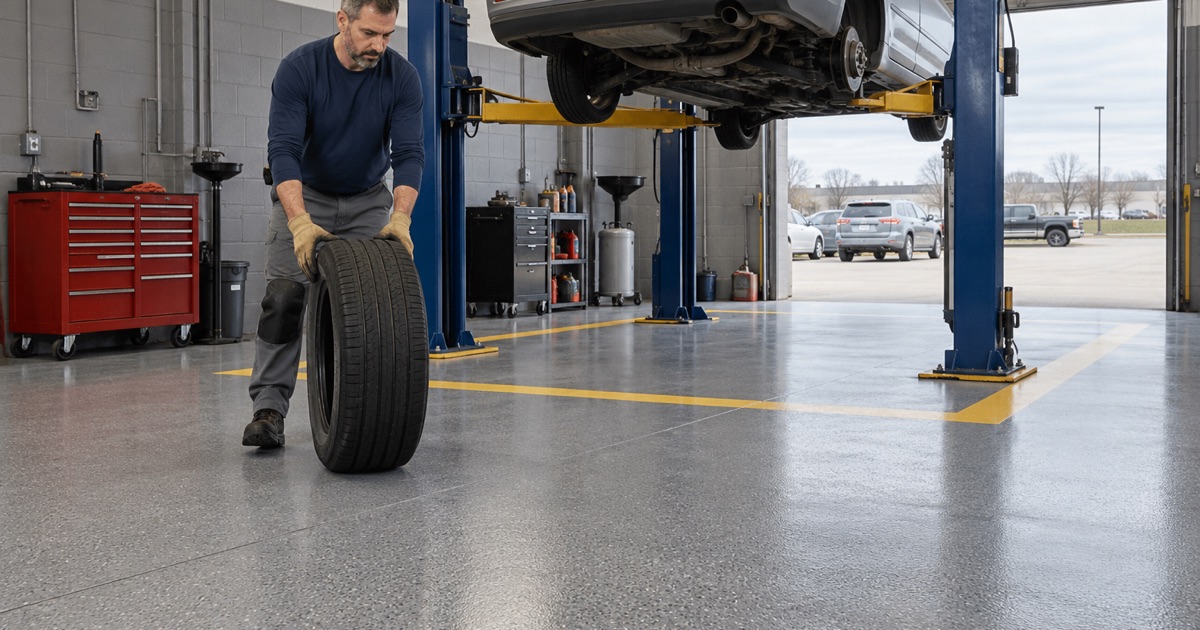
Service bays face oil, brake fluid, coolant, hot tires and dropped tools. We use chemical-resistant systems with added texture where fluids collect, and we plan around bays so vehicles can keep moving through the shop.
For heavy equipment or hot washdowns, urethane cement may be a better choice than standard epoxy, and we will recommend it where it fits. The proposal shows the cost difference so the choice is made on real numbers.
Testing and Preparing Commercial Slabs
Moisture in new build-outs
New construction and tenant build-outs often have young slabs that still hold water from placement. We test with ASTM F2170 relative humidity probes or ASTM F1869 calcium chloride tests before pricing, and specify a moisture-mitigation primer where the readings call for it.
Moisture is the first exclusion we name in any coating warranty. Explaining it before the job is sold avoids surprises if the schedule pushes coating onto a slab that is not ready.
Removing old floor coverings
Many commercial spaces come with VCT, carpet tile or old coatings. All of it, including the adhesive beneath, has to come off so the new system bonds to concrete. We grind adhesive and mastic away and inspect the slab before priming.
We also repair joints, spalls and cracks found during removal. Those repairs are listed in the proposal so the facility team knows exactly what was done before the floor went down.
Keeping a Commercial Floor in Service
A seamless commercial floor is maintained by cleaning rather than stripping and waxing. Daily dust mopping and a neutral cleaner, or an auto scrubber on larger floors, keep it looking right, while harsh acidic cleaners and strong solvents can dull a topcoat over time. Walk-off mats at entries catch the grit and road salt that wear a floor fastest during an Iowa winter.
After years of traffic, a well-bonded floor can usually be cleaned, abraded and given a fresh topcoat rather than being ground back to concrete. We check the bond before recommending a recoat, and we can schedule that work in the same overnight and weekend windows as the original installation.
- 20+ Years in Epoxy Flooring
- Moisture Tested Before Pricing
- Coats and Thickness in Writing